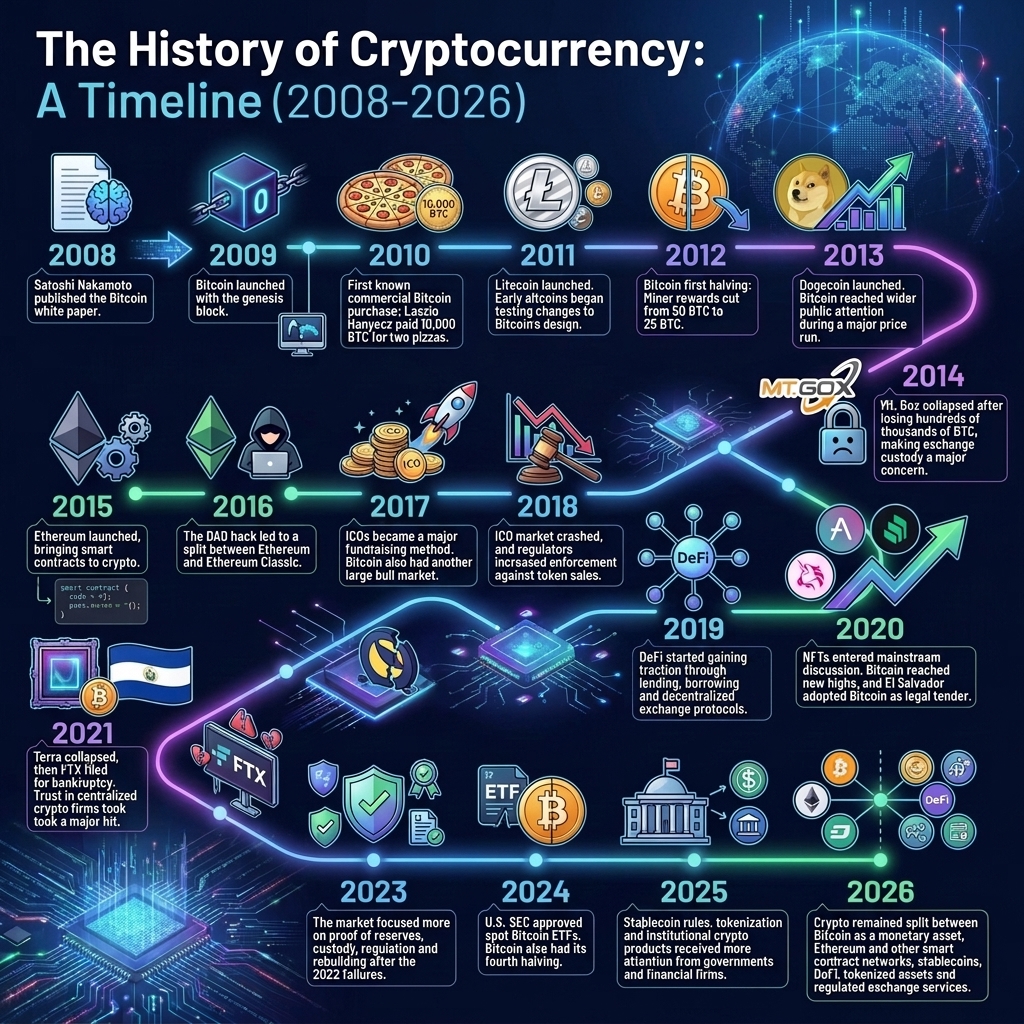




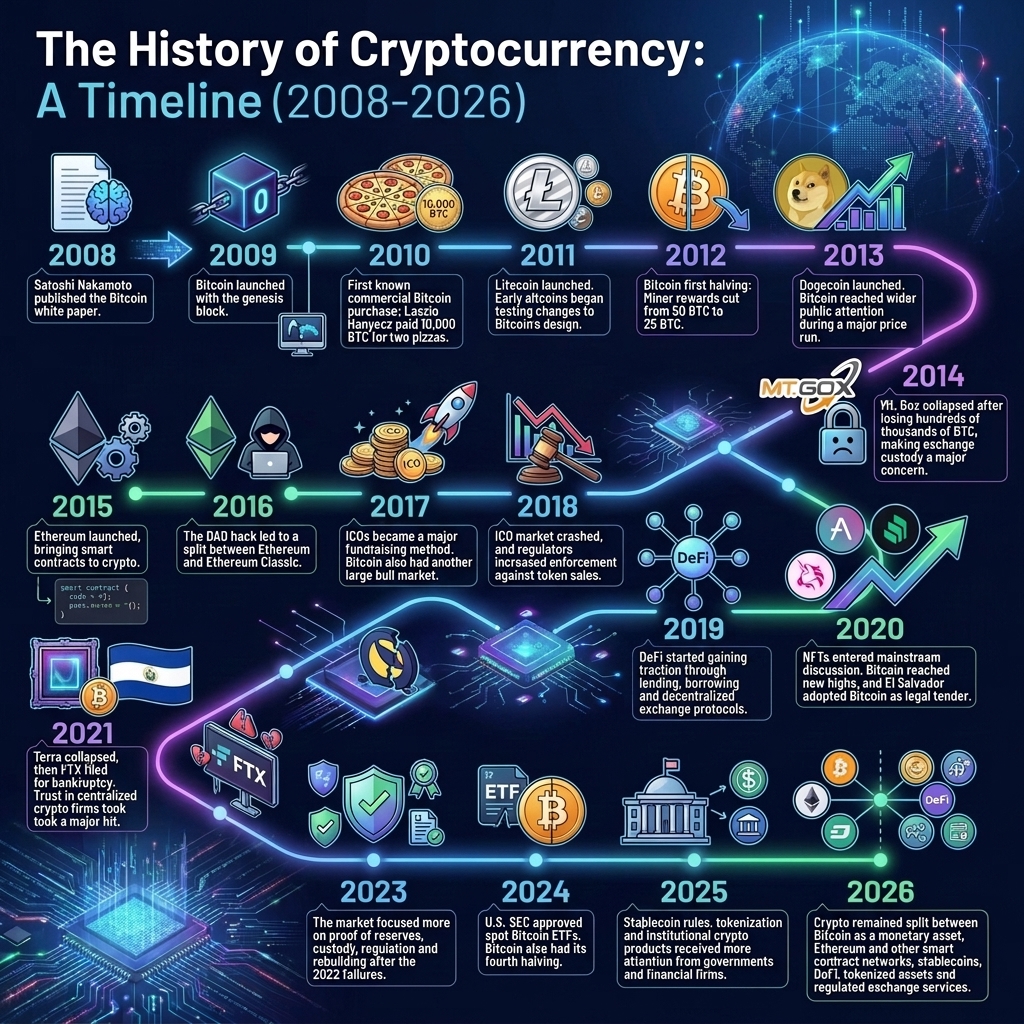






fix the 2022 year missing and correct the text for 2019 2008: Satoshi Nakamoto published the Bitcoin white paper. 2009: Bitcoin launched with the genesis block. 2010: The first known commercial Bitcoin purchase happened when Laszlo Hanyecz paid 10,000 BTC for two pizzas. 2011: Litecoin launched. Early altcoins began testing changes to Bitcoin’s design. 2012: Bitcoin had its first halving, cutting miner rewards from 50 BTC to 25 BTC. 2013: Dogecoin launched. Bitcoin also reached wider public attention during a major price run. 2014: Mt. Gox collapsed after losing hundreds of thousands of BTC, making exchange custody a major concern. 2015: Ethereum launched, bringing smart contracts to crypto. 2016: The DAO hack led to a split between Ethereum and Ethereum Classic. 2017: ICOs became a major fundraising method. Bitcoin also had another large bull market. 2018: The ICO market crashed, and regulators increased enforcement against token sales. 2019: DeFi started gaining traction through lending, borrowing and decentralized exchange protocols. 2020: DeFi grew sharply, with protocols such as Uniswap, Aave and Compound becoming widely used. 2021: NFTs entered mainstream discussion. Bitcoin reached new highs, and El Salvador adopted Bitcoin as legal tender. 2022: Terra collapsed, then FTX filed for bankruptcy. Trust in centralized crypto firms took a major hit. 2023: The market focused more on proof of reserves, custody, regulation and rebuilding after the 2022 failures. 2024: The U.S. SEC approved spot Bitcoin ETFs. Bitcoin also had its fourth halving. 2025: Stablecoin rules, tokenization and institutional crypto products received more attention from governments and financial firms. 2026: Crypto remained split between Bitcoin as a monetary asset, Ethereum and other smart contract networks, stablecoins, DeFi, tokenized assets and regulated exchange services.
Free to start · Generate videos and images with AI in seconds